Meshtastic is an open-source project that turns inexpensive LoRa radio modules into a decentralised mesh network — no internet, no infrastructure, no subscription. Messages hop between nodes automatically, extending range far beyond what any single radio could achieve alone.
My starting point was a LilyGo T-Beam Supreme, one of the more capable Meshtastic nodes available, with built-in GPS, a decent battery management system, and a solid community behind it. Initial experiments in the living room were underwhelming — the coverage was limited and the node count disappointing.
A few simple changes made a significant difference. Taking inspiration from la5l.no, I ordered a Gizont 17 cm antenna from AliExpress, picked up a small pigtail cable, and found a suitable enclosure at Biltema. With the node relocated to the attic, the improvement was immediate and substantial.
The network configuration I run is known locally as “Vestlandsnett” — a set of agreed-upon parameters used across the region to ensure compatibility between nodes:
| Parameter | Value |
|---|---|
| Centre frequency | 869.618 MHz |
| Bandwidth | 62.5 kHz |
| Spreading Factor | SF8 |
| Code Rate | CR5 (4/5) |
| Hop limit | 5 |
Important update as of October 1st 2026, “Vestlandsnett” has, as other Meshtastic communities in Norway, changed over to a new preset setup enabled from firmware 2.8.0 called NARROW_FAST. This gives predefined values for everything except frequency, at least for me. Frequency has also been changed to 869.44165 MHz.
The timing also worked out well. Around the same time I moved my node to the attic, a new router node went live on Rundemanen — set up by LA1B. That node has excellent line-of-sight across the region, and connecting to it made a noticeable difference. The stability and node count I have seen since is almost certainly in no small part thanks to that node.
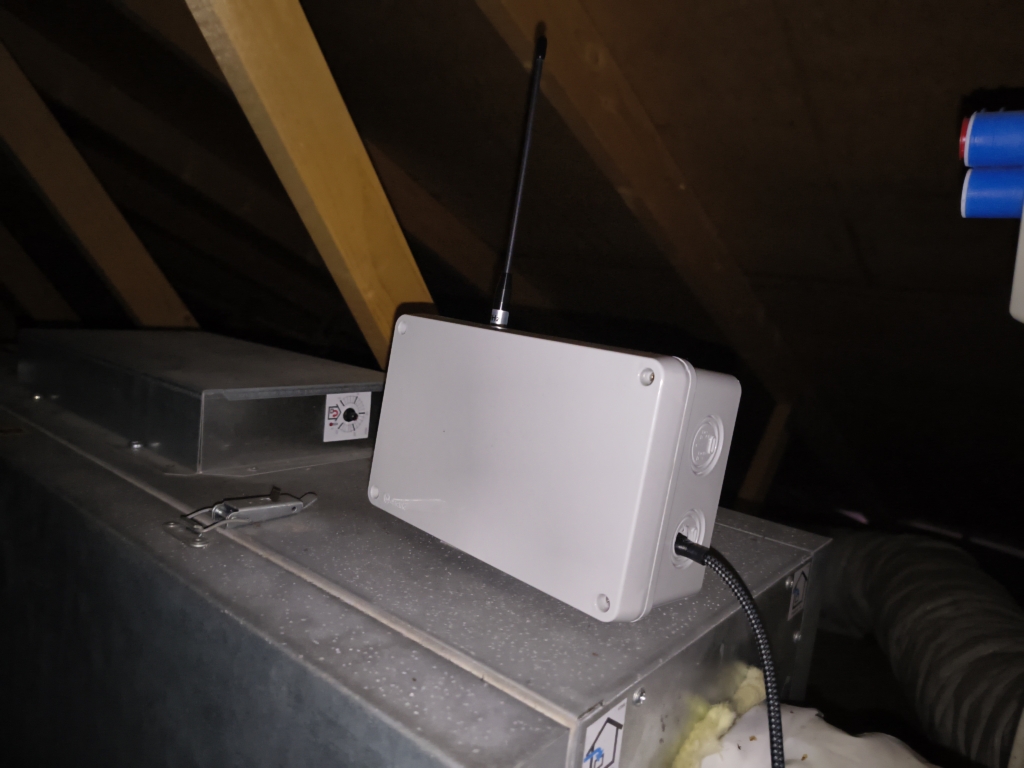
With this setup, I consistently see 60–80 nodes online, spanning from Stavanger in the south to Bergen in the north. For a low-power LoRa mesh running on licence-exempt frequencies, that kind of reach is genuinely impressive.